

Traveling to Europe from the US or the UK? What you need to know about new EES and ETIAS Visa
After years of seamless travel, travel to Europe is about to look very different. The EU will soon be introducing new border systems aimed at making border checks more efficient, preventing irregular migration, and making travel across borders easier. As a non-EU traveller, I have a lot of experience applying for Europe visas and ETAs, as well as adjusting to new travel procedures. This post details current updates, everything you need to know about the EES and ETIAS requirements for US and UK travelers, and how these changes will impact your next European trip.
Entry/Exit System (EES)
What is EES?
It is an automated system for registering non-EU short-stay travelers whenever they cross the external borders of any European country. The EES will register all a traveller’s entries, exits, and entry refusals, as well as basic details like name and travel documents.
It replaces passport stamping.
When does EES start
EES starts from 12 October 2025. European countries will gradually roll out the EES system at their external borders, with full implementation by 10 April 2026. Each country determines its own roll-out schedule.
How does EES work?
If you arrive at a European border, you must register your personal data. Border officers will scan your fingerprints and take a photo of your face. The information will then be stored in a digital file.
If you have already crossed a European border using EES, then your fingerprints and photo will already be recorded. In that case, a border officer will only verify your data.
Who does EES affect?
The EES applies to non-EU nationals, that is any traveler who is not a national of any EU country, Iceland, Norway, Liechtenstein or Switzerland.
EES applies to both non-EU nationals who need a short stay visa to visit Europe; or those who do not currently need a visa.
How does it work?
If you arrive at a European border, you must register your personal data. Border officers will scan your fingerprints and take a photo of your face. The information will then be stored in a digital file.
If you have already crossed a European border using EES, then your fingerprints and photo will already be recorded. In that case, a border officer will only verify your data.
Who will EES apply to?
The EES applies to non-EU nationals, that is any traveler who is not a national of any EU country, Iceland, Norway, Liechtenstein or Switzerland.
EES applies to both non-EU nationals who need a short stay visa to visit Europe; or those who do not need a visa.
How long can you stay in Europe?
You can use the official EU short-stay calculator to check how long you can legally stay. You are typically only allowed to stay in EU for 90 days within any rolling 180-day period.
Which European countries will implement EES and ETIAS?
The following countries will be implementing the new EES and ETIAS systems: Austria, Belgium, Bulgaria, Croatia, Czechia, Denmark, Estonia, Finland, France, Germany, Greece, Hungary, Iceland, Italy, Latvia, Liechtenstein, Lithuania, Luxembourg, Malta, Netherlands, Norway, Poland, Portugal, Romania, Slovakia, Slovenia, Spain, Sweden and Switzerland.
ETIAS (New Europe Travel Authorisation/Visa)
What is ETIAS?
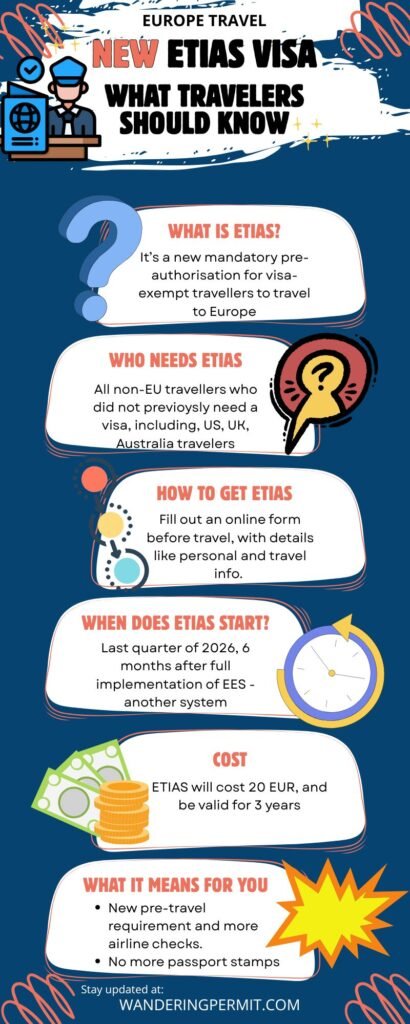
ETIAS (European Travel Information and Authorisation System) is a digital travel authorisation system necessary for travel to 30 European countries. It’s a new pre-authorisation for visa-exempt travellers, including those from US, UK, Australia, and Japan.
When will you need ETIAS?
ETIAS will go into effect in the last quarter of 2026. Keep checking this post and the official EU website for updates on when it’s live.
How to apply for ETIAS?
Travellers will need to fill out an online ETIAS form and pay a fee before being able to travel to Europe/Schengen countries. They will then get the travel authorization allowing them to travel to Europe.
The ETIAS will be accessed through an official website and/or app. Every traveller will need their own ETIAS.
What information do you need to apply for ETIAS?
To apply, you will need to submit:
- your personal information: name, address, contact information, date and place of birth, sex, and nationality ;
- your travel document information – your document should be valid at least 3 months after the intended departure from Europe;
- Parents names;
- Level of education and current work;
- details about your travel plans (including the first European country you intend to stay in);
- Information about past travels, immigration history, or criminal convictions.
When should you apply for ETIAS?
For most travelers, they should get their ETIAS within minutes, but processing may take up to 30 days. You should apply for ETIAS well in advance of your travel.
ETIAS Fee:
The ETIAS fee will be EUR 20.
Who needs ETIAS?
All non-EU travellers who did not previously need a visa will need an ETIAS. Check out the full list of nationals that require ETIAS here.
Travelers who already hold a visa, residence permit, or long-stay permit do not need an ETIAS travel authorization.
What EES and ETIAS mean for Europe Travel
- New border processes from October 2025: From 12 October, border crossings will likely experience longer wait times as authorities and travelers adjust to the new EES system.
- Last Chance to get passport stamps: There will be a 6-month progressive period from 12 October until April 2026. During this time, authorities will record entries and exits in the new system and also stamp passports. If you want an opportunity to get a quickly disappearing passport stamp, then you want to travel during this period.
- Pre-travel Requirement and Airline Checks: When the EES and ETIAS go into effect, airlines may need to verify your status before travelling. This means you as a traveler need extra time at the airport.
WANT MORE EUROPE TRAVEL INSPIRATION AND INSIGHTS?
Get Inspired
References
Stay informed on the latest information about EES and ETIAS on the official websites here:
Frequently Asked Questions (FAQs)
Yes. Depending on your nationality, you need either a Schengen visa or an ETIAS travel authorization to travel to Spain, France, Italy.
You should apply as early as possible, and before you book confirmed tickets or hotels. For most travelers, ETIAS will be processed within minutes to 96 hours. However, it can take up to 30 days if extra checks are needed.
No. Beginning last quarter of 2026, all non-EU travelers will need a Schengen visa or ETIAS travel authorization to travel to Europe.
Beginning last quarter of 2026, UK nationals will need an ETIAS travel authorization to visit any of the 30 European countries.
There are exceptions for British nationals who are beneficiaries under the Withdrawal Agreement.
Yes. Beginning last quarter of 2026, U.S. citizens will need an ETIAS travel authorization to visit any of the 30 European countries, including popular destinations like Spain, France, and Italy.
There are exceptions for those who hold long-term residence permits and visas.
Yes. The UK and Europe operate their own independent visa policies. Furthermore, UK is no longer a part of the EU, so travelers need to secure either a visa or ETIAS (beginning last quarter of 2026).

About wandering permit
Hi, I’m Becky – a world traveller who has visited over 40+ countries on my ‘weak’ African passport and successfully applied for multiple visas. I have also lived in the US, the UK and Europe (Belgium, France and Denmark). On Wandering Permit, I share real tips to help travellers navigate visa application processes and new destinations with less stress. My goal is to help make travel planning easy!
One Comment