
Proof of Funds for a UK Visitor Visa: What Works and What Doesn’t
When I applied for my first UK Visitor visa, the part that stressed me out the most wasn’t the actual application. It wasn’t even the appointment. It was the proof of funds/financial requirements and more specifically my bank statement.
How much money is “enough”?
Does it matter where the money comes from?
Can you aggressively save for two months – will that look suspicious?
I have now applied for UK visas more than six times – as a visitor, a student, Global Business Mobility and other routes. These applications have taught me something important: it’s about more than having money – your money needs to be believable and to make sense.
The financial evidence part is even more tricky since the UK Home Office does not provide a set amount of monetary funds that visa applicants need to show.
But ultimately, visa caseworkers are guided by some general principles. They will closely assess the applicant’s financial documents for:
- Sufficient resources
- Consistent funds
- Traceable funds
- Continued easy access to the available funds
- Ability to reasonable cover your travel expenses without detriment
Why Financial Evidence is the most important part of your application
Financial evidence is one of the highest risk areas of UK Visa supporting documents, and the one where people trip up. The proof of funds documents are held to a high standard when assessing visas, especially since it’s the one solid proof that an applicant will cover all travel expenses and not be a burden to the UK system. Finances also reveal how strong the applicant’s ties are in their home country.
A lot of applicants, however, assume you just need to show “enough money”. But just showing a statement with money is not enough. You need to go beyond and show that the funds are genuinely available, lawfully acquired and available for you to spend accordingly.
UK Visas and Immigration (UKVI) caseworkers apply detailed requirements when assessing financial documents. Thankfully, this guidance is readily available online and you should scrutinize it when preparing your application.
What the UK Home Office Officially Looks for as “Proof of Funds”
When filling out the online application, the form will request details of how much you earn (if you have an income) – and details of gross vs net income, as well as your regular expenses.
Official guidance just states that you should be able to show that “you’re able to support yourself and your dependants during your trip (or have funding from someone else to support you)”.
Similarly, the other financial requirement is ability to “pay for your return or onward journey (or have funding from someone else to pay for the journey).”
Documents to submit for Bank Statements and other Financial Evidence
So, what do the official guidance actually mean and what is UKVI looking for?
1. Personal bank Statements
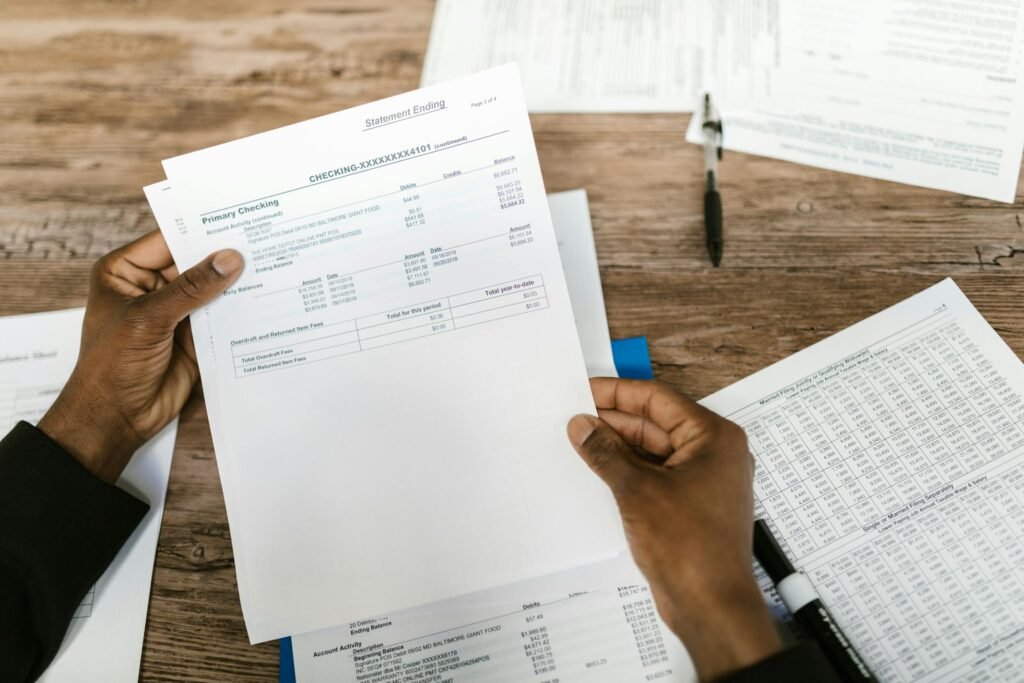
The most important financial proof you will submit will be personal bank statements.
The UK government does not have an official required level of funds that an applicant needs to show.
However, you should remember that the UK – particularly London – is one of the most expensive cities in the world. To estimate how much you need to show per day, you can use cost of living calculations as a guide. I recommend using a rough budget of about £100 per day per visitor, excluding accommodation costs.
For bank statements:
- It must be dated within 31 days before the date of application
- Show applicant’s name, account and full transaction history
- Come from a financial institution that is regulated by a appropriate body in country of operation
- Screenshots, altered and/or partial statements can be rejected
- Should be verifiable, even if printed online
If the bank statement shows foreign currency, then the money is converted to £ pounds using the exchange rate on www.oanda.com on the date of application.
2. Proof of earnings e.g. Payslips and employer letters
To accompany your bank statements, it’s important to submit documentation proving the source/origin of funds. Here is where your payslips and employer letter come in.
If employed, include a letter from your employer confirming your employment details , including:
- Start date of employment
- Role
- Salary
- Company contact details
Similarly, if self-employed, include your business registration documents, or relevant statements of earnings , invoices, and tax returns that confirm ongoing self-employment.
3. Other accounts: Savings, Deposit Accounts, Pension funds that can be withdrawn, Investment Accounts
While bank statements tend to be the more common document many applicants use for financial evidence, UKVI accepts funds held in other accounts like current, deposit, savings, withdrawable pension and investment accounts – as long as the money can be accessed immediately.
If submitting statements from other accounts, it should adhere to the same regulations as bank statements:
- Dated within 31 days before date of application
- Show applicant’s name, account, and full transaction history
- Should be fully verifiable
- Statements must be unaltered – no screenshots or edits
Documents not accepted as Proof of Funds
For visa purposes, funds held in accounts or instruments like shares, bonds, credit cards, pensions where immediate withdrawal not possible, irrespective of any notice period, cannot be accepted as financial evidence.
5 Things that your Visitor Visa Financial Documents should Show
1. Sufficient Funds to maintain and accommodate yourself
The UK government clearly states that there “is no set level of funds required for an applicant”. However, the case worker is checking that you as an applicant have enough money to cover accommodation and maintain yourself for the entirety of your planned visit.
They will calculate the likely costs of your planned accommodation, flight, activities and daily sustenance. This cost will then be evaluated against your sources of money.
Make sure your trip budget is reasonable and matches your lifestyle. For instance, when I was a student, most of my travel accommodations were very cheap hostels. With a work income now, I go for mid-priced hotels as I can show funds to cover those costs.
REMINDER: Even after your visa is granted, the border officer may ask where you’re planning to stay and ask for evidence you can access these funds.
2. Ability to comfortably cover both travel costs and ongoing commitments
This is one of the main reasons I see applicants confused about their UK visa refusals!
Yes, you can have enough money for the trip. But the visa caseworker is also looking at your ongoing monthly expenses! They look at your commitments in your home country / country of residence such as rent and mortgage, financial dependents (even if they’re not travelling) etc.
The assessor will then calculate your income and savings, minus these commitments at home to ensure that you can still reasonably meet the expenditures of your trip.
And yes, the online application asks you to list your monthly expenses.
To summarize, your money needs to match your financial story. If it looks like your trip costs your entire month salary – while you still have rent or mortgage to pay, and dependents you cater for – then that can be a red flag.
Some guidelines , based on my experience, that you can use to meet this requirement and avoid a refusal are:
- Monthly disposable income should be a significant chunk of net income
- Available funds that are at least twice the expected trip cost
3. No unexplained deposits before applying
Unexplained deposits on the statement right before applying can increase your chances for refusal. Visa caseworkers are instructed to verify the source of available funds. Your financial supporting documents should show a unified story of where your money is originating from (e.g. employer letter, payslip, investment documentation, property sale etc).
Home Office will take notice to any borrowed money from someone that is deposited into your account for the sole purpose of visa applications. This is called “parked funds” and would not meet the eligibility of accessible, available funds that are in your control.
4. Stable consistent balance over time
Similarly, your financial documents for the UK visa application should show that the funds have been held in your account for long. If the account does not show a consistent and stable balance, then it also invites further scrutiny.
For my applications, I submit 3 – 6 months of bank statements ensuring that the balance did not dip too much at any point.
5. Clear Transaction History and activity
Lastly, when submitting your financial statements, they should include your transaction history – no edits or alterations. Your case appears credible if you can also demonstrate constant cash flow (i.e. money in, money out).
Submit documents with normal spending on regular expenses like rent, bills, groceries etc – not just dormant money. An account with zero activity doesn’t mean automatic refusal, but it can increase scrutiny.
Visa Sponsorship: Using a Sponsor Correctly
You are allowed to use a sponsor to support your travel, maintenance, or accommodation . This post goes into further detail regarding sponsorship: who can be a sponsor, documents needed, and common mistakes.
Generally, If using a sponsor, then the supporting documentation should answer these questions:
- What support the sponsor will be providing e.g. are they covering your flight, accommodation and maintenance expenses?
- How the support is being provided, for example, will the sponsor host you at their house? Will they pay for a hotel?
- That the person supporting you has enough funds to support themselves and their dependents
- The relationship between you and the sponsor
- E.g. are they a family member, or your employer
There are some cases where UKVI actually expects the applicant to have a sponsor, with the most common being where a child is applying to come to the UK as a visitor.
The child is expected to meet the requirement by showing access to funds from a parent or third party. A student would also be expected to show financial documents that may be in a sponsor’s name e.g. a parent.
Now, sometimes, you may want to pause and question whether a sponsor is a good idea. For instance in these cases:
- If your sponsor has weak financial documentation or is financially unstable (serious risk)
- Unclear or distant relationship with sponsor

Required Supporting Documents for Visa Sponsorship
A sponsor can be a family member, friend, relative or employer, it just needs to be someone with whom the applicant has a genuine personal or professional relationship – and the visa officer can verify this!
Having a financial sponsor is not an automatic detriment to your application and does not imply you don’t have sufficient funds or are unemployed etc.
In fact, in cases where I have applied for a work-related visa like the Global Business Mobility visa, I prefer to only use a sponsor to show funds. I truly think this has strengthened my application!
Here are the documents your visa sponsor should provide:
- Proof of regular income
- Bank statements with available funds to cover the applicant as well as sponsor’s own expenses
- Documents e.g. letter stating or showing the relationship between the sponsor and the applicant
- If sponsor is in the UK, proof of continued immigration permission
If you’re going the sponsorship route, then check out this detailed guide too: UK Visitor Visa Sponsorship Explained: Who Can Sponsor You: What to Prove and Documents Needed.
Conclusion: It’s About Credibility, Not Just Money
Financial documents/proof of funds is not about showing a big bank balance – it’s about credibility, robustness and genuine documentation.
Your bank statement and financial documentation should strengthen the story of your application: how much you earn, how you spend and how you can afford the trip without burdening yourself or the UK government.
Finances will be the most vital part of your application. To increase your chances for approval, these documents need to be clear, reasonable and easy for the caseworker to understand and decide that you will meet the conditions of the visa.
References
UK Visa Supporting Document Checklist 2026: Complete List & Tips
Visiting the UK: guide to supporting documents – GOV.UK
Immigration Rules – Immigration Rules Appendix Finance – Guidance – GOV.UK
Check out other UK Visitor Visa Posts
- UK Visitor Visa Documents Checklist: What I Submitted and Why It worked
- UK Visitor Visa Sponsorship Explained: Who Can Sponsor You, What to Prove & Documents Needed
- Strong Ties to Home Country for UK Visitor Visa: What it Means & How to Prove Them
- UK Visitor Visa Travel History: Does it matter?

About wandering permit
Hi, I’m Becky – a world traveller who has visited over 40+ countries on my ‘weak’ African passport and successfully applied for multiple visas. I have also studied and worked across the US, Europe (Belgium, France and Denmark) – and currently live in London, UK. On Wandering Permit, I share real tips to help travellers navigate application processes and new destinations with less stress. My goal is to help make travel planning easy!
4 Comments